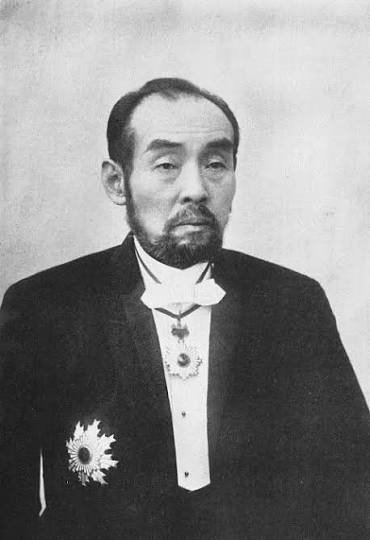
Fujita Denzaburo
Founder of the Fujita zaibatsu / born in Minamikatakawa-cho, Hagi castle town
Fujita Denzaburo was born into a family of sake brewers and soy sauce makers in Hagi. From a young age he mingled with loyalist activists of the sonno joi (revere the emperor, expel the barbarians) movement alongside the family trade, and helped fund their activities. Around 1869, after the Meiji Restoration, he moved to Osaka, where he began building his fortune supplying military boots and blankets. In 1877, the business he had founded in Osaka grew into "Fujita-gumi," expanding into mining, civil engineering and construction, textiles, and more, eventually becoming a zaibatsu (the Fujita zaibatsu) spoken of in the same breath as Mitsui and Mitsubishi.
(Fujita zaibatsu, from 1877) → Fujita Kogyo → Tourism division spun off independently (1955) → Fujita Kanko
Today's Fujita Kanko (operator of the Chinzanso and Hakone Kowakien resorts, among others) was not a company founded by Fujita Denzaburo himself, but rather emerged in 1955 when the tourism division of Fujita Kogyo — the successor to the Fujita zaibatsu he built — became independent. Fujita Kanko can be said to stand atop the "lineage" of wealth built by an industrialist from Hagi.
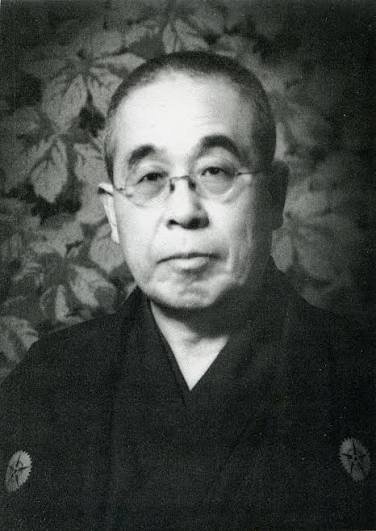
Kuhara Fusanosuke
Founder of the Hitachi mine / born in Hagi, nephew of Fujita Denzaburo
Kuhara Fusanosuke was born in Hagi, the son of Kuhara Shozaburo, Fujita Denzaburo's elder brother — making Denzaburo his uncle. He joined his uncle's company, Fujita-gumi, at a young age and made his name in the practical side of mine management, before striking out on his own in 1905. He bought the Akazawa copper mine in Ibaraki Prefecture and renamed it the "Hitachi mine," launching it as his own enterprise. Through the introduction of modern mining and smelting technology, the Hitachi mine rapidly grew into one of Japan's leading copper mines.
In 1928, Kuhara handed management of the business to his brother-in-law Ayukawa Yoshisuke, and himself turned to politics, later serving as Minister of Communications, among other posts.
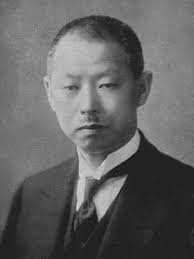
Ayukawa Yoshisuke
Founder of the Nissan konzern / born in Oichi village, Yoshiki District, Yamaguchi Prefecture (present-day Yamaguchi City), from a family of Hagi-domain samurai
Ayukawa Yoshisuke was not born within Hagi's castle town itself, but his family had served Hagi Domain as samurai for generations, and his mother was a niece of Inoue Kaoru, one of the Choshu Five. After studying mechanical engineering at Tokyo Imperial University, he founded the casting company Tobata Imono, establishing himself as a businessman. When his younger sister Kiyo married Kuhara Fusanosuke, the two became brothers-in-law, and in 1928, as Kuhara turned to politics, management of Kuhara Mining was entrusted to him.
Ayukawa reorganized the company as "Nihon Sangyo Co., Ltd." (Nissan), rapidly growing it through his own method of listing subsidiaries' shares one after another to raise capital. Hitachi, Ltd. became one of the core companies of the Nissan konzern under this structure, and expanded further under Ayukawa's leadership. In 1933 he founded Nissan Motor, and also brought under his umbrella Nippon Suisan (a fisheries company) and Nippon Chikuonki Shokai (a record company in the lineage of today's Columbia and Victor labels), building in a single generation the "Nissan Konzern," one of the leading new zaibatsu of prewar Japan.