A teacher who taught for only two and a half years.
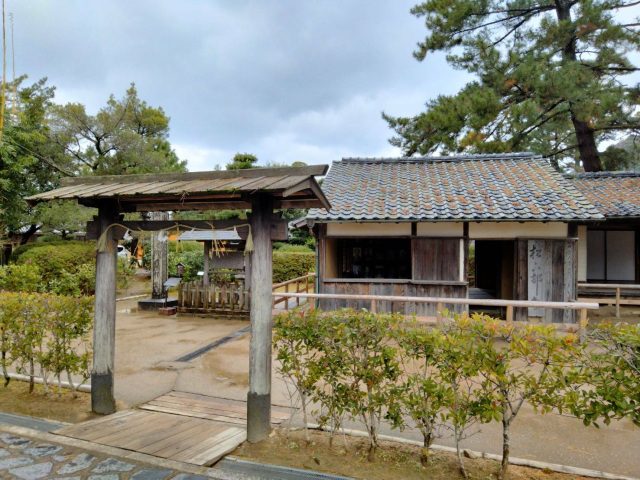
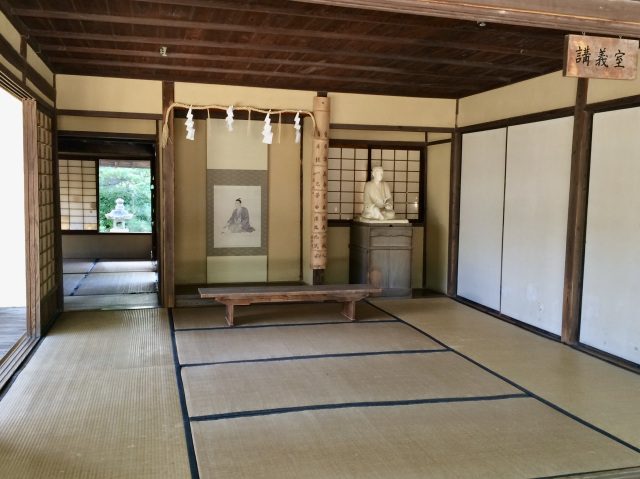
Shokasonjuku ("Academy of the Pines and Reeds"), which Yoshida Shoin took over from his uncle Tamaki
Bunnoshin, was a small private academy — a single eight-mat room — on the grounds of the Sugi family
residence on the outskirts of Hagi's castle town. In the roughly two and a half years from the eleventh
month of 1857 until Shoin's imprisonment in the Ansei Purge of 1859, young men who would go on to form
the core of the Meiji government gathered here: Kusaka Genzui, Takasugi Shinsaku, Ito Hirobumi, Yamagata
Aritomo, Maebara Issei, and others. Shoin's teaching method — sitting his students at the same table
regardless of rank and debating with them as equals — was extraordinary for its time.
松陰
身はたとひ武蔵の野辺に朽ちぬとも 留め置かまし大和魂
Yoshida Shoin, from Ryukonroku ("Notes of a Departing Spirit"), written in 1859 just before his execution
Shoin himself was implicated in the Ansei Purge and executed at just twenty-nine. It is precisely the gap
between the brevity of his time running the academy and the enormous role his students later played that
gives rise to the saying that "the Meiji Restoration was born from a mere eight mats."
Exterior of the academy buildingShoin Jinja groundsInside the lecture roomShokasonjuku
Six lives
The Restoration leaders Hagi raised
Introducing, alongside their achievements, the people who were born and educated here and who lived through the years from the late shogunate into the Meiji era.
1830 – 1859 (died at 29)
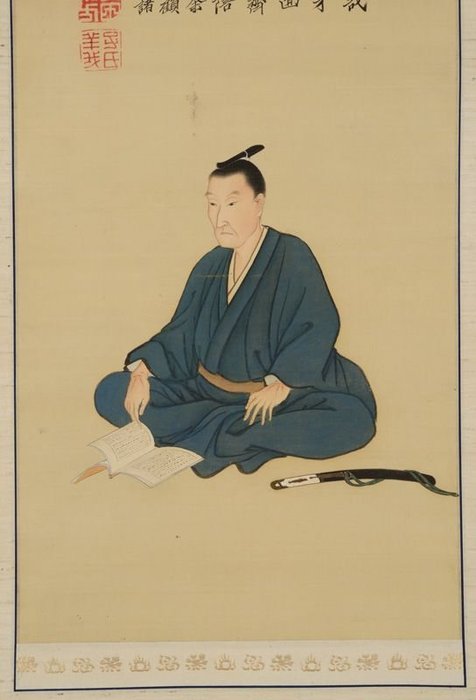
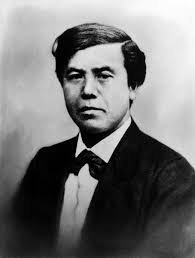
Yoshida Shoin
Thinker and head of Shokasonjuku / born in Matsumoto village, Hagi
Born into a family of military scholars, he stood at the lectern of Meirinkan at just nine years old, a prodigy. He was imprisoned after attempting to stow away to the West when Perry's fleet arrived, and after his release he ran Shokasonjuku. Under his conviction that "learning can change anyone, regardless of rank," he raised the young men who would become a future prime minister and army elder statesmen. He was implicated in the Ansei Purge and executed at twenty-nine.
1839 – 1867 (died at 27)
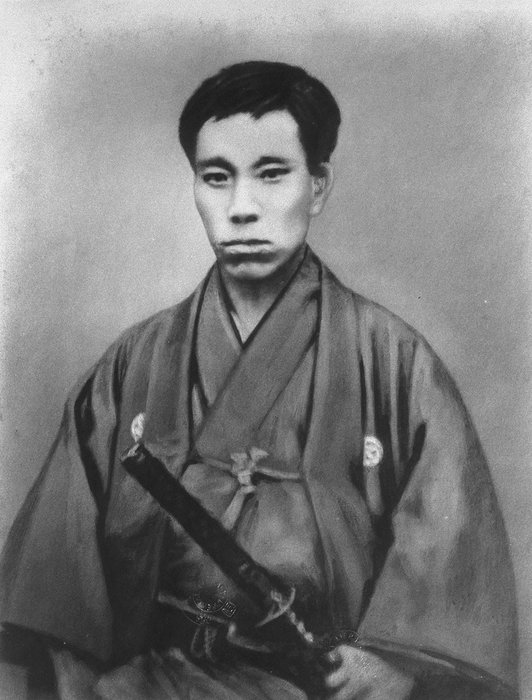
Takasugi Shinsaku
Founder of the Kiheitai / born in Kikuya-yokocho, Hagi castle town
One of the "Four Heavenly Kings" who studied at Shokasonjuku. In 1863, at Shimonoseki, he organized the Kiheitai, a volunteer militia open to men of any rank, overturning warfare as the exclusive domain of the samurai class. In 1865 he led the uprising at Kojoji Temple that decisively tipped the domain's wavering policy toward overthrowing the shogunate. He died of tuberculosis at twenty-seven, just before the Restoration.
1833 – 1877 (died at 45)
Kido Takayoshi (Katsura Kogoro)
One of the "Three Great Nobles of the Restoration" / born in Gofuku-cho, Hagi castle town
Pursued by the Shinsengumi and others and nicknamed "Kogoro the Runaway," he nonetheless achieved the greatest diplomatic feat of the Restoration era: the Satsuma-Choshu Alliance. Under the Meiji government he helped draft the Charter Oath and led the abolition of the domains in favor of prefectures. He is counted, alongside Saigo Takamori and Okubo Toshimichi, as one of the "Three Great Nobles of the Restoration."
1841 – 1909 (died at 68)
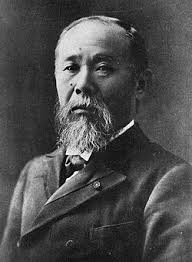
Ito Hirobumi
Japan's first prime minister / born in Tsukari village, Kumage District (present-day Hikari City); adopted into a foot-soldier family of Choshu Domain and studied at Shokasonjuku
Though not born in Hagi itself, he was adopted as a child into a low-ranking samurai family of Choshu Domain and studied under Shoin at Shokasonjuku. In 1863 he smuggled himself to Britain as one of the Choshu Five. After returning, he served as Japan's first prime minister (four times in total) and led the drafting of the Meiji Constitution. He was assassinated in Harbin in 1909.
1838 – 1922 (died at 83)
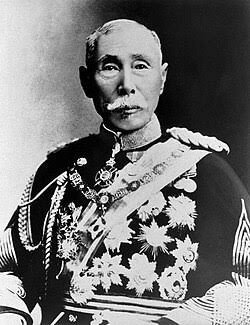
Yamagata Aritomo
"Father of the Army" / Prime Minister (3rd and 9th) / born in Kawashima, Hagi castle town
He studied at Shokasonjuku and rose to prominence as an inspector of the Kiheitai. Under the Meiji government he introduced military conscription, building the foundations of the Japanese army from the ground up as its "father." After serving twice as prime minister, he remained a powerful elder statesman in politics for decades.
1836 – 1915 (died at 79)
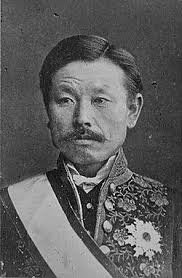
Inoue Kaoru
Japan's first foreign minister / born in Yuda village, Suo Province (present-day Yamaguchi City)
Though from outside Hagi, he was a retainer of Choshu Domain and, in 1863, one of the Choshu Five alongside Ito Hirobumi. He was involved in domestic musket manufacturing at the Nagasaki Ironworks and Japan's first iron bridge, then served as governor of the mint, and finally as Japan's first foreign minister worked for years toward revising the unequal treaties. His full voyage to Britain is told on the "Choshu Five" page.
All portraits are either paintings made before or during the Meiji era, or old photographs taken during it.
A reading note: Of these six, four — Yoshida Shoin, Takasugi Shinsaku, Kido Takayoshi, and Yamagata Aritomo — were born within Hagi's castle town (today's central Hagi City). Ito Hirobumi was born in present-day Hikari City and was adopted into a Choshu samurai family as a child; Inoue Kaoru was born in present-day Yamaguchi City. All were retainers of Choshu Domain with ties to Hagi, and all are deeply connected to Hagi's history through Shokasonjuku and the Choshu Five.
Next
To the young men who crossed the sea
Five men, including Inoue Kaoru and Ito Hirobumi, actually smuggled themselves abroad in defiance of the sakoku ban. Their story continues on the next page.