Home / Smuggled Abroad

02 — A voyage to Britain, risking execution

Breaking the sakoku ban,
five men set out for London.

In 1863, at a time when discovery of overseas travel meant execution, five retainers of Choshu Domain smuggled themselves out of Yokohama. Their goal was to learn Western technology and institutions firsthand. These young men, later known as the "Choshu Five," would go on to lay the foundations of Japan's railways, mint, engineering, law, and diplomacy.

Group photograph of the Choshu Five, taken in London in 1863
London, 1863 (Hagi Museum collection)

How the voyage came about

Hidden in the hold, a 137-day crossing

In 1863, Choshu Domain — which was, at least officially, committed to expelling foreigners — secretly decided, through the efforts of powerful domain figures Inoue Kaoru and Ito Hirobumi, to send five retainers to England. At the time, traveling abroad without shogunate permission was a serious crime. The five boarded the British merchant ship Pegasus at Yokohama and are said to have hidden themselves in something like the ship's hold to leave Japan undetected. Traveling via Shanghai, they reached London after roughly four and a half months, and began studying as auditing students at University College London (UCL).

An ironic two days: The five smuggled themselves out of Yokohama on June 24, 1863 (the tenth day of the fifth month in the traditional calendar). Just two days earlier, that very same Choshu Domain had launched its policy of expelling foreigners, opening fire on foreign ships passing through the Shimonoseki Strait. The domain "driving out the foreigners" and the domain "sending its young men abroad to learn from them" were one and the same. Even the five men themselves had initially set out to acquire military technology in service of expelling foreigners — but once in Britain, confronted with the vast gap in national strength between Japan and the West, they abandoned that goal and turned instead toward opening the country and modernizing.
Yokohama
Departed June 24, 1863
Shanghai
Stopover
London
Arrived autumn 1863
UCL
Studied as auditing students
Return
Ito and Inoue in 1864; the other three in 1866

Ito Hirobumi and Inoue Kaoru learned of the Bombardment of Shimonoseki by the Four-Nation Allied Fleet from a newspaper, and returned home in under a year in an attempt to stop the fighting. The remaining three — Yamao Yozo, Endo Kinsuke, and Inoue Masaru — continued their studies further and returned in 1866.
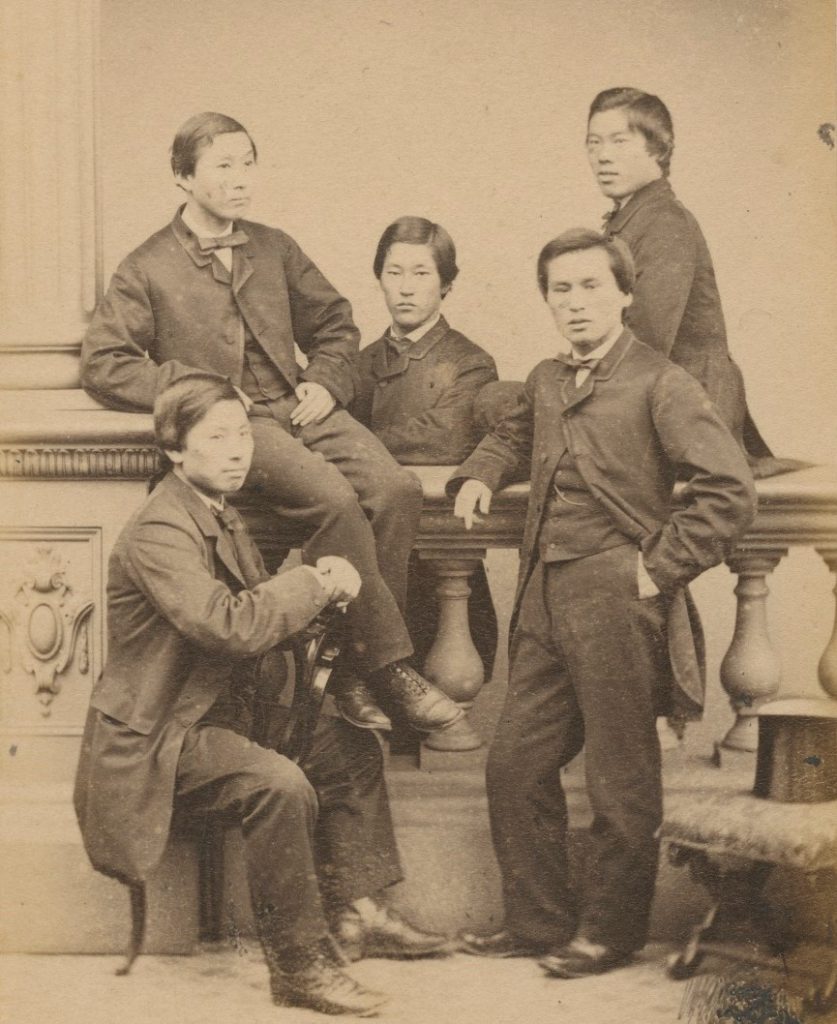
Group photograph of the Choshu Five, taken in London in 1863
Top left: Endo Kinsuke/Center: Inoue Masaru/Top right: Ito Hirobumi
Bottom left: Inoue Kaoru/Bottom right: Yamao Yozo

Photo: Hagi Museum collection (via the official Hagi City Tourism Association website)
After returning home

What each of them brought back — five "firsts" for Japan

Their gamble in smuggling themselves abroad bore fruit as the foundations of five fields directly tied to Japan's modernization.

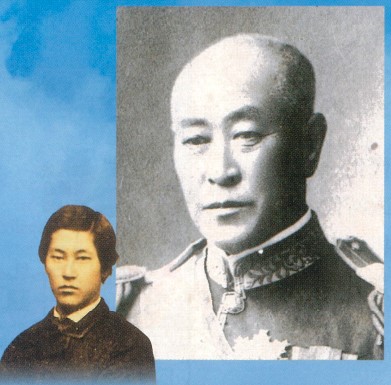
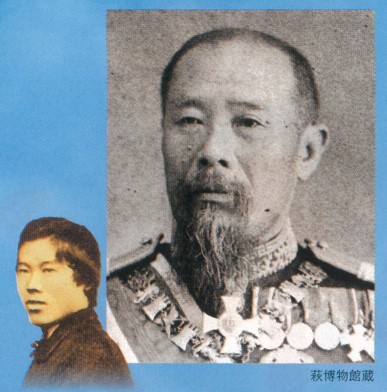
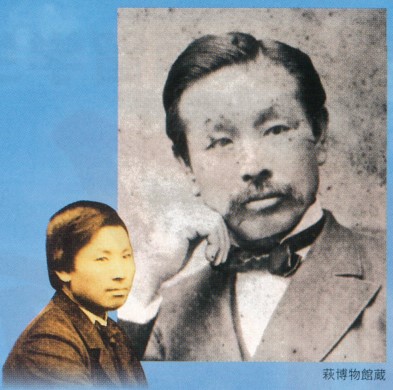
Portrait of Ito Hirobumi (at the time of his voyage, and in later years) 1841–1909

Ito Hirobumi

"Father of the Cabinet" / Japan's first prime minister

Led the drafting of the Meiji Constitution. See the "Restoration Figures" page for more.

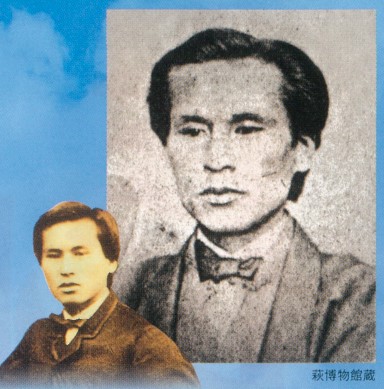
Portrait of Inoue Kaoru (at the time of his voyage, and in later years) 1836–1915

Inoue Kaoru

"Father of Diplomacy" / Japan's first foreign minister

After working on domestic musket production at the Nagasaki Ironworks and Japan's first iron bridge, he served as governor of the mint and then, as Japan's first foreign minister, worked for years toward revising the unequal treaties.

Portrait of Yamao Yozo (at the time of his voyage, and in later years) 1837–1917

Yamao Yozo

"Father of Engineering" / Minister of Public Works

Studied shipbuilding and mechanical engineering in Glasgow. After returning, he proposed founding the Ministry of Public Works and its Imperial College of Engineering (now the Faculty of Engineering, University of Tokyo), single-handedly laying the foundation of engineering education in Japan.

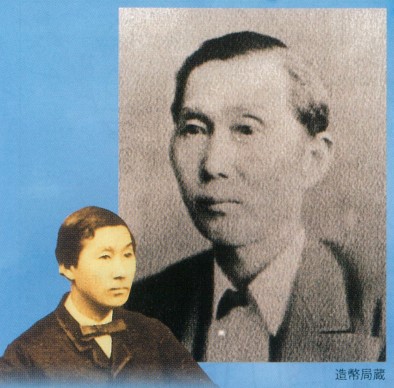
Portrait of Endo Kinsuke (at the time of his voyage, and in later years) 1836–1893

Endo Kinsuke

"Father of the Mint" / Director of the Mint Bureau

Worked on building the Osaka Mint and later became its director. In 1889 he succeeded in casting copper coinage using Japanese engineers alone. It was also Endo who created the mint's famous cherry-blossom walk, the "Sakura no Tori-nuke."

Portrait of Inoue Masaru (at the time of his voyage, and in later years) 1843–1910

Inoue Masaru

"Father of the Railways" / Director-General of the Railway Agency

The key figure behind Japan's first railway, opened between Shinbashi and Yokohama in 1872. He went on to lead construction of the Tokaido and Tohoku main lines and devoted himself to training railway engineers. The only one of the five actually born in Hagi's castle town.

五傑
Even at the cost of breaking the domain's own ban, we had to see the West with our own eyes.
A summary of the sentiment often attributed to the Choshu Five's motive for the voyage

Portraits (at the time of the voyage and in later years): Hagi Museum collection, except Endo Kinsuke, held by the Japan Mint (via the official Hagi City Tourism Association website)
Follow their footsteps

Places connected to the Choshu Five

From the schools where they studied before their voyage to the residences each of them later built, their traces are still scattered through the streets of Hagi.

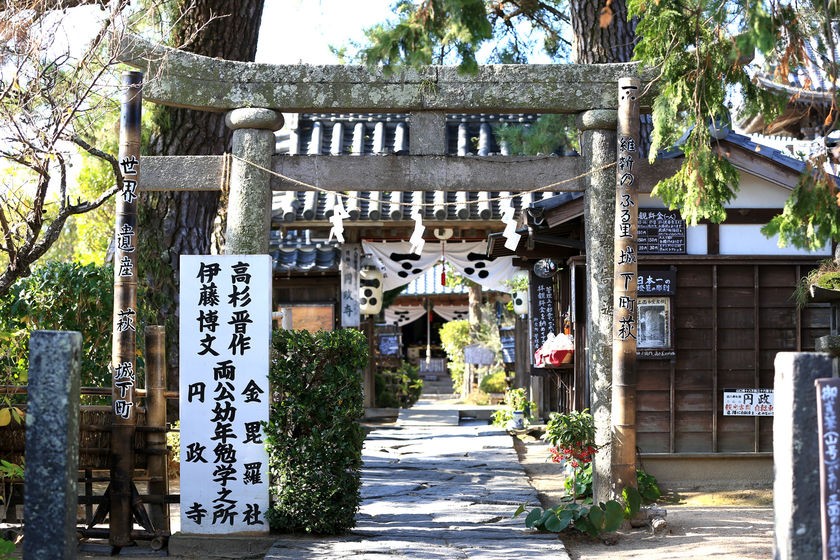
The torii gate and grounds of Konpira Shrine and Enseiji Temple
Konpira ShrineBoyhood roots
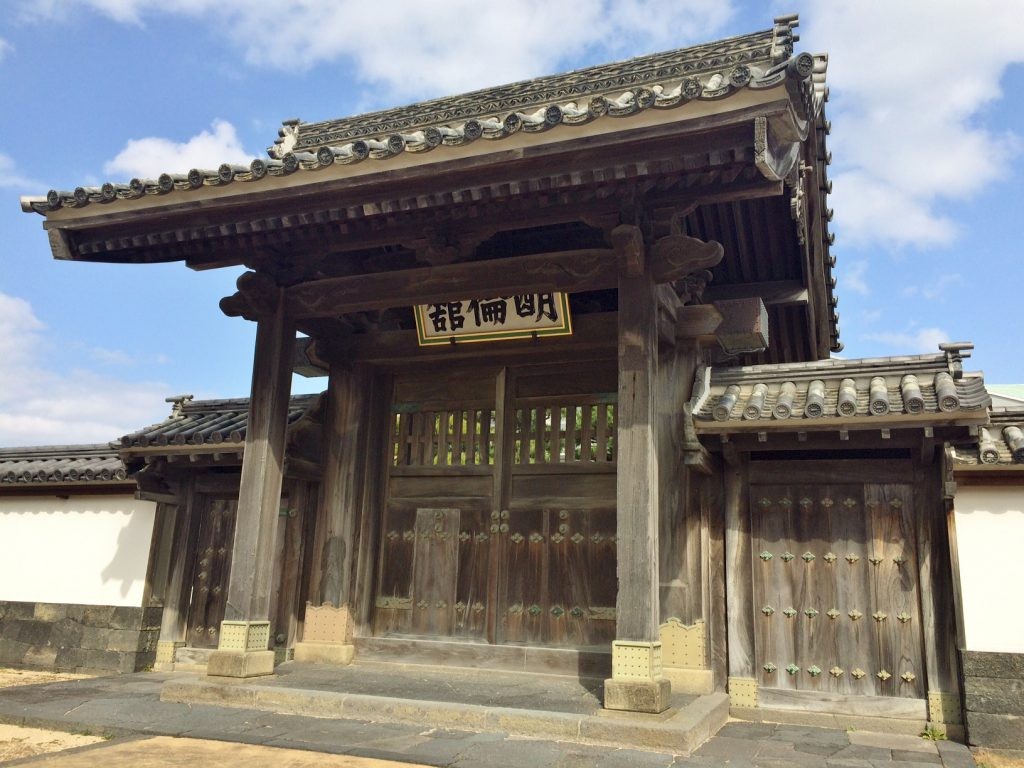
The Kantoku Gate of the former Hagi domain school Meirinkan
Former MeirinkanThe Five's school
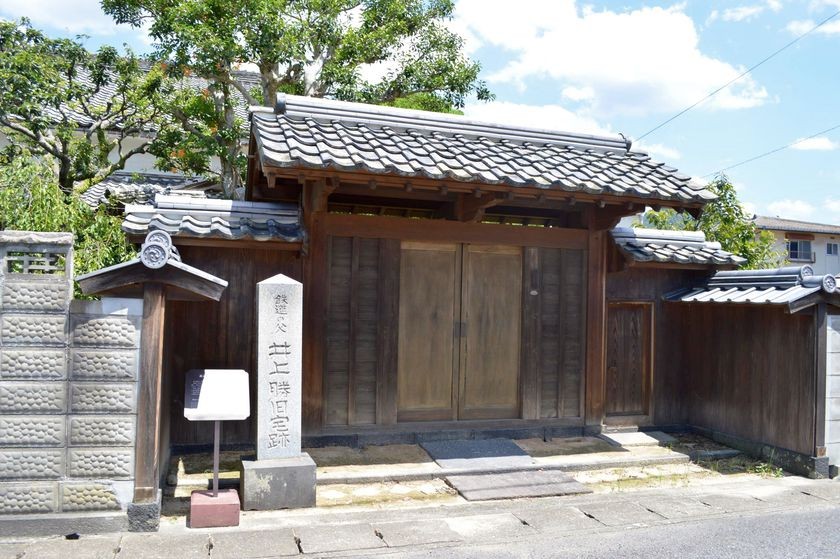
The gate of Inoue Masaru's former residence and its stone marker
Inoue's residenceRailway pioneer
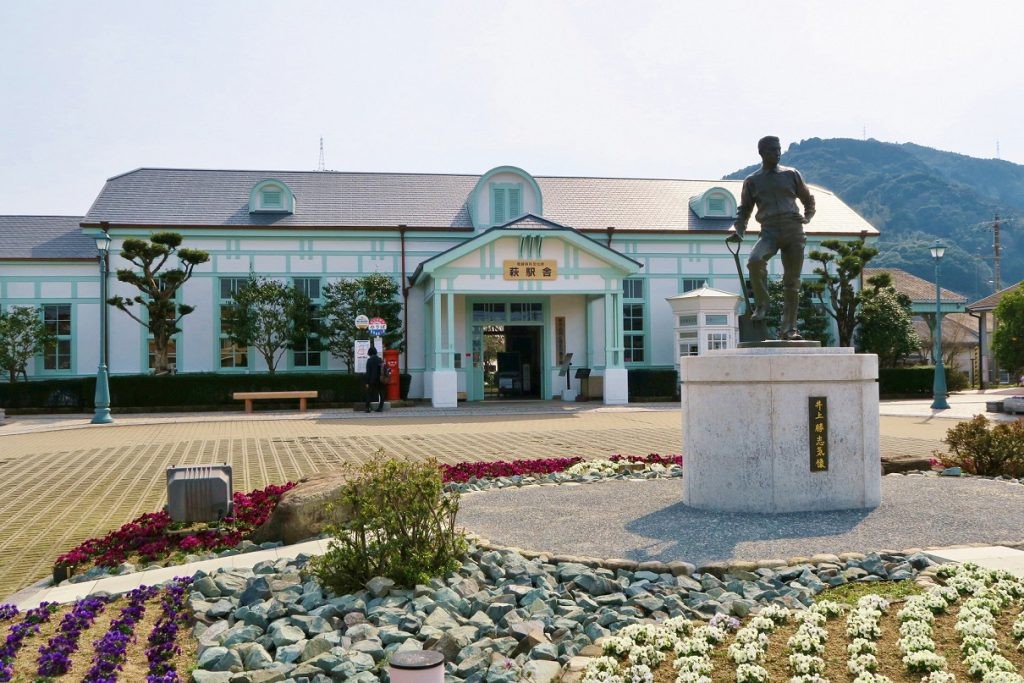
JR Hagi Station building and the statue of Inoue Masaru
JR Hagi StationInoue's statue
The Shokasonjuku building
ShokasonjukuTheir academy
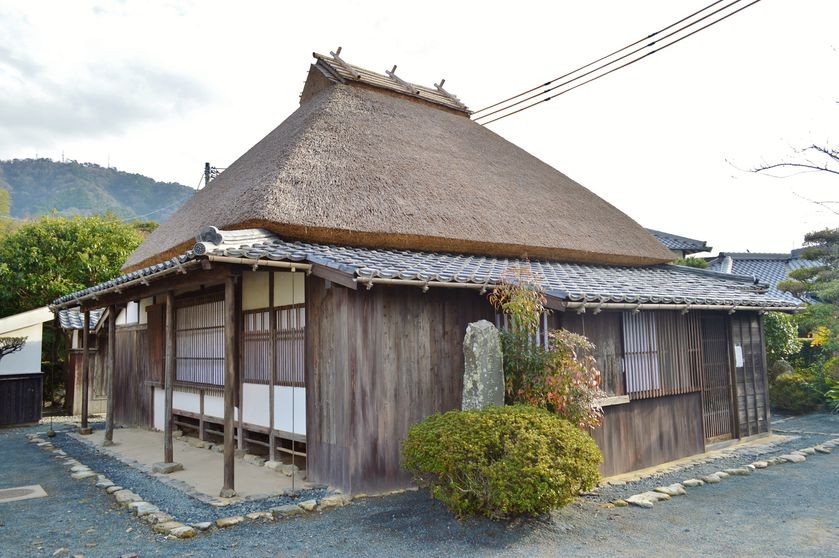
The thatched-roof building of Ito Hirobumi's former residence
Ito's old homeThatched roof
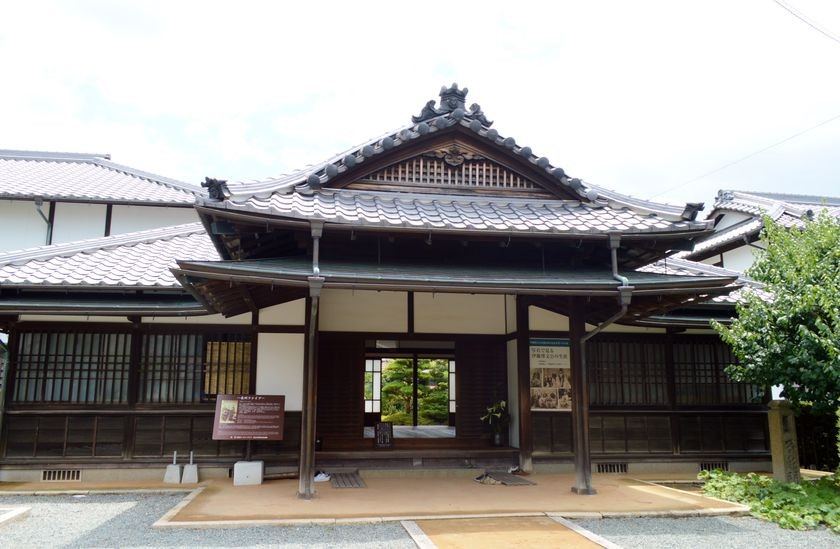
The entrance of Ito Hirobumi's villa
Ito's villaFrom Tokyo

Next

From smugglers to industrialists

Choshu's network of talent reached not only into the core of the Meiji government but into Japan's industrial world. On to the story of Fujita Denzaburo, who built the Fujita zaibatsu, and Ayukawa Yoshisuke, who built the Nissan konzern.

Read the story of the industrialists →
Advertisement Ad space (AdSense placeholder)