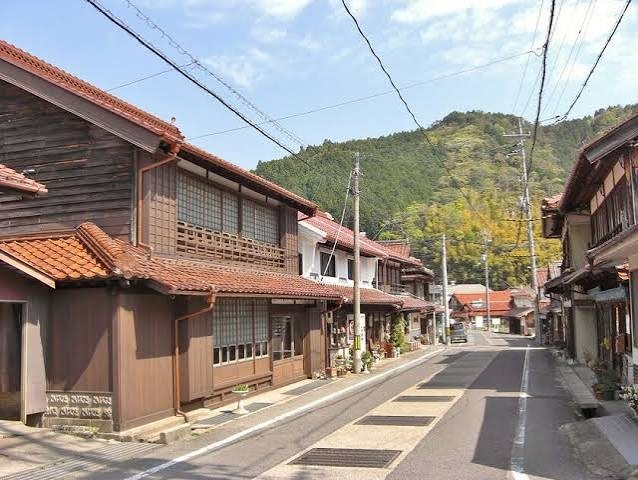
Folk tale versus fact
The story told of many castle towns across Japan — that "people of the old days disliked the railway and pushed it away from town" — has been shown by research to be, in most cases, a legend invented later. Hagi is no exception.
The tale goes that, citing the smoke and vibration of steam locomotives, or concerns about feng shui and scenery, the town's powerful figures drove the railway away from the castle town.
When the San'in Main Line was extended to Hagi in 1925, the old castle town was already a mature built-up area, making it difficult to secure new land for a station or tracks. As a result, the station was placed on the outer edge of the old town.
As a result, Hagi Station and Higashi-Hagi Station were both built outside the old castle town, and the railway never cut through the built-up area itself. It wasn't a deliberate preservation policy but rather, one might say, a case of "escaping development" — and that, ironically, is the single biggest reason the Edo-period street layout has survived intact to this day.
The skeleton of the castle town
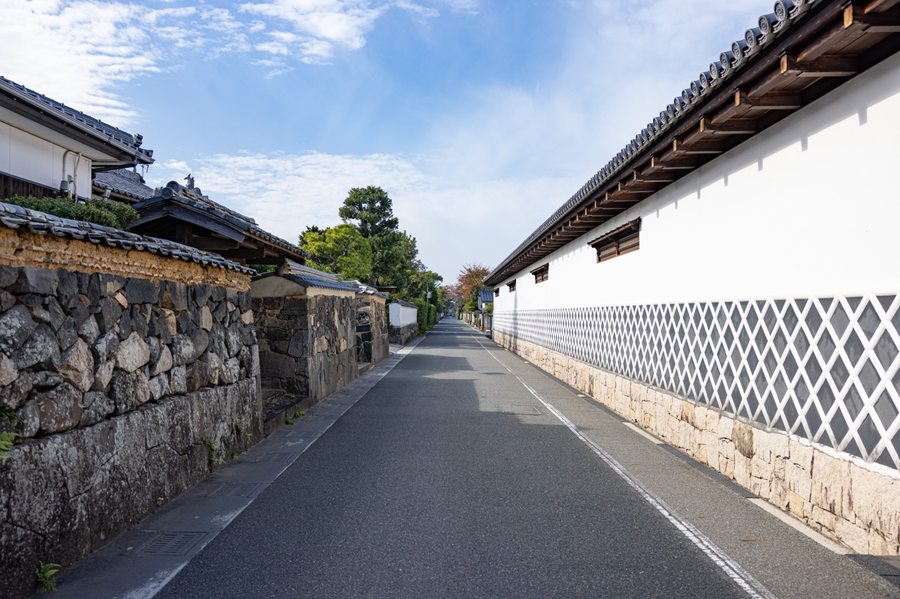
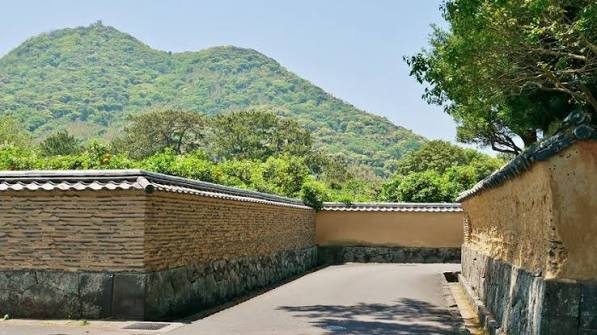
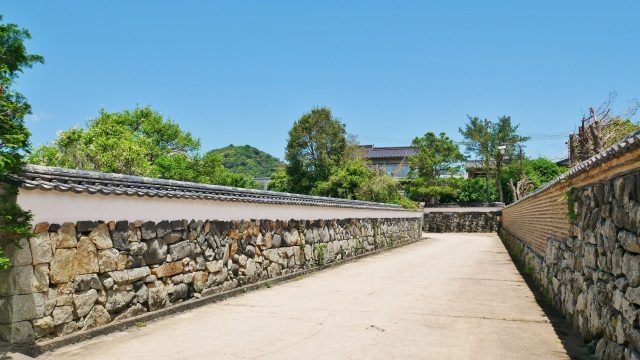
Hagi's castle town was laid out in 1604 at the foot of Mt. Shizuki, when Mori Terumoto built his castle there. The delta-shaped terrain — bordered on three sides by the Matsumoto and Hashimoto rivers and on the fourth by the Sea of Japan — became the outline of the castle town itself, with samurai districts, merchant districts, and temple/shrine districts each laid out in their own orderly zones. The crooked, right-angled streets known as kaimagari were a defensive design meant to obstruct sightlines and hinder any enemy advance, and they survive today in the Hiyako district. Streets lined with earthen walls, natsumikan trees, and white plaster walls are among Hagi's most celebrated views.
Important Preservation Districts for Groups of Traditional Buildings
Hagi City has four nationally designated Important Preservation Districts for Groups of Traditional Buildings — the same number as Kyoto or Kanazawa.
HORIUCHI
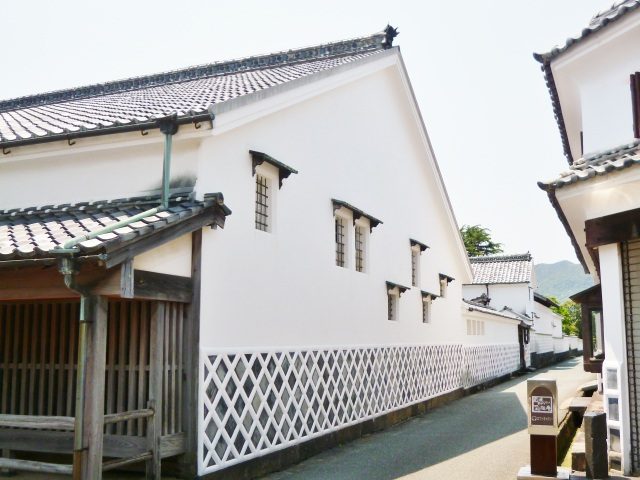
The former third bailey of Hagi Castle, a residential district for upper-ranking samurai. Samurai architecture survives here, including the Masuda family watchtower and the Suo family's long gate, characterized by long stretches of white earthen walls and stone walls.
HIYAKO
A samurai district spreading south of the outer moat. The crooked kaimagari streets, built for defense, survive here today. It is also, as noted on the next page, the birthplace of natsumikan cultivation.
HAMASAKI
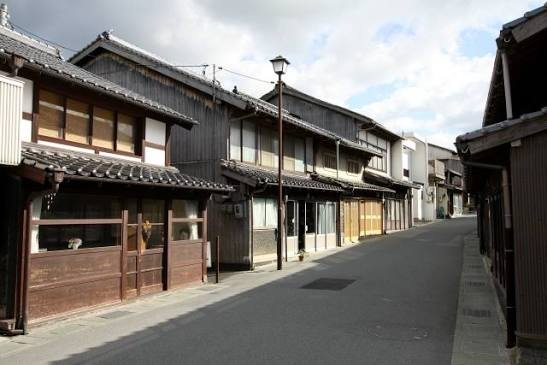
A merchant town that flourished as the castle town's outer port. Numerous merchant houses from the Edo period through the early Showa era survive here, and preservation efforts, including burying utility lines underground, are underway.
SASANAMI-ICHI
A post town along the Hagi Okan, the historic road linking Hagi and Yamaguchi. Thatched-roof houses and red Sekishu-tile roofs remain, blending together with the surrounding terraced rice fields.
Next
Within this samurai and merchant district, a domain school and countless private academies were packed close together. On to Hagi's educational environment.